Tracing baccarat's global spread through documented casino records and strategy manuals
Erik Koch · Oct 20, 2026
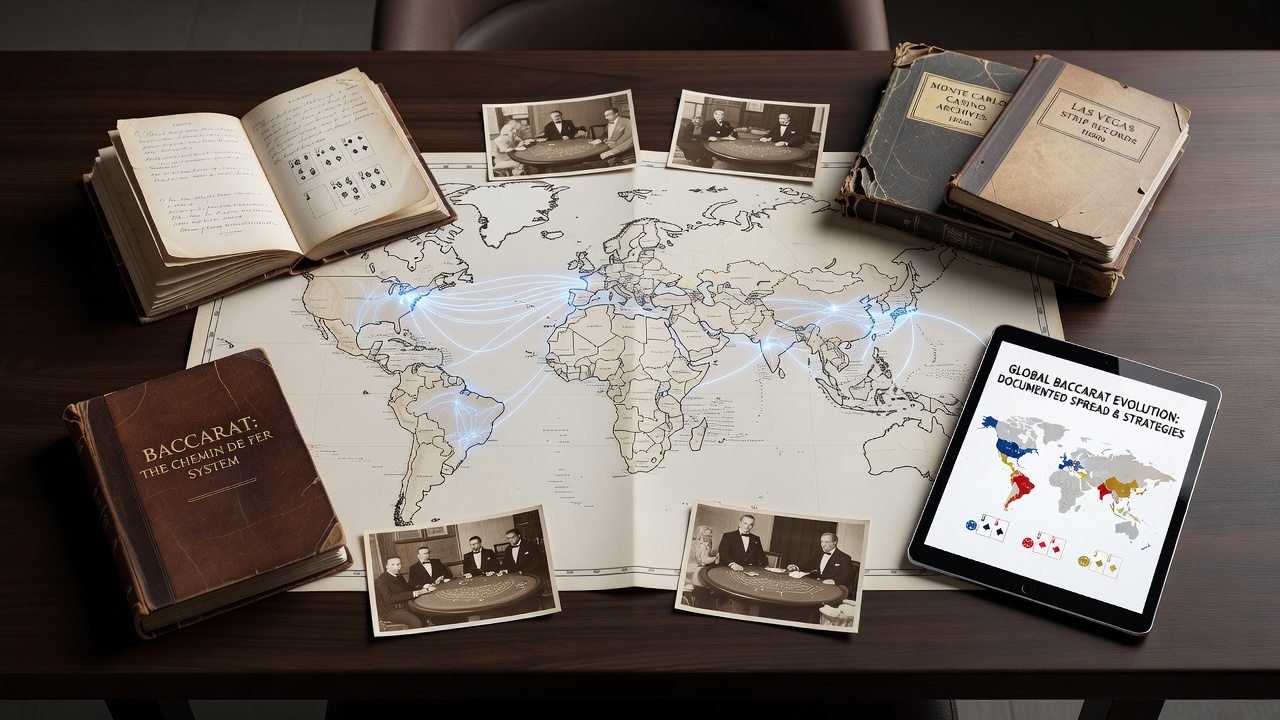
Tracing baccarat's global spread through documented casino records and strategy manuals
Documented casino records trace baccarat from its Italian roots in the 1400s through French adaptations in the 1800s and onward to international expansion, while strategy manuals reveal evolving player approaches across continents. Casino ledgers from Monte Carlo's Société des Bains de Mer, established in 1863, list baccarat tables as central attractions by the 1870s, with revenue entries showing consistent play volumes that exceeded those of other table games at the time. These records detail daily win percentages and player counts, providing quantitative evidence of the game's early European foothold.
European foundations in archival ledgers
Archival materials from French casinos in the mid-19th century record baccarat variants such as chemin de fer, with player bankrolls and house takes documented in handwritten registers now preserved in national archives. Observers note that British gaming houses adopted similar formats shortly after, as evidenced by club membership logs from the 1880s that track high-stakes sessions involving aristocracy. Researchers examining these ledgers identify patterns of seasonal peaks tied to tourist influxes, confirming baccarat's role in sustaining casino operations during economic fluctuations.
Transatlantic movement through American records
Casino documentation from early 20th-century American establishments shows baccarat arriving via imported European practices, with Nevada gaming commission filings from the 1950s listing the game among approved table offerings at venues like the Flamingo. These state records include licensing applications and monthly revenue reports that quantify baccarat's contribution relative to blackjack and roulette, revealing steady growth through the 1960s. Strategy manuals published in the United States during this period, such as those referencing basic probability tables, align with the same ledgers by outlining house-edge calculations that match the documented payout structures.
One study of mid-century Nevada archives highlights how baccarat tables expanded in number as player interest grew, supported by cross-referenced player tracking sheets that recorded average bet sizes and session durations. Data from these sources indicates that by 1970, baccarat accounted for a measurable share of total table-game revenue in major properties.
Asian expansion documented in regulatory files
Regulatory filings from Macau authorities track baccarat's dominance beginning in the 1980s, with annual reports detailing table counts and gross gaming revenue that surpassed other formats by wide margins. These government documents record the introduction of high-limit rooms and the corresponding rise in VIP player registrations through the 1990s and early 2000s. Strategy manuals translated into Chinese during the same era incorporated local adaptations while retaining core probability frameworks found in earlier Western publications.
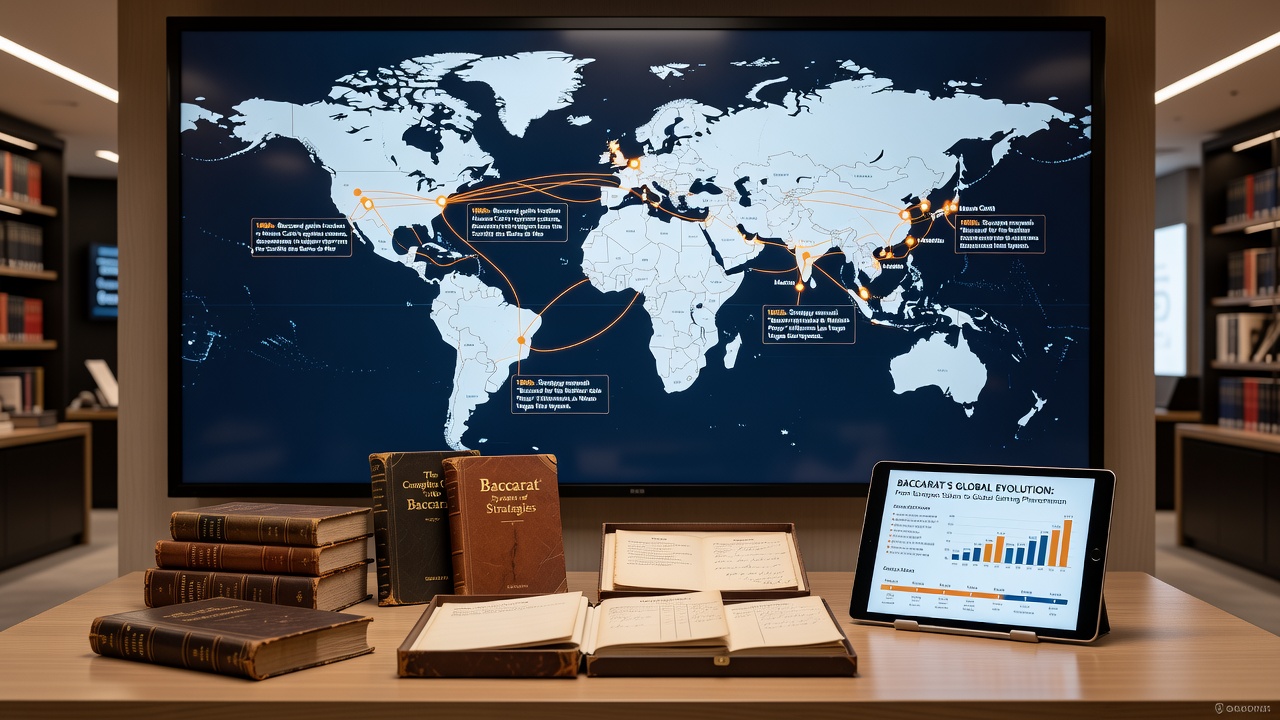
Industry reports from the Nevada Gaming Control Board continue to log baccarat alongside other games in contemporary statistics, while Australian gaming research institutions have published analyses of table-game distributions that include historical comparisons extending to Asian markets. Records maintained by the Macau Gaming Inspection and Coordination Bureau show baccarat comprising over 80 percent of casino revenue in certain years, corroborated by player-volume metrics preserved in official submissions.
Evolution of strategy manuals across regions
Printed strategy guides from the 19th century onward provide additional documentation of baccarat's spread, with French editions focusing on chemin de fer rules and later American versions introducing card-counting methods validated against casino payout data. Library collections hold manuals from the 1920s that reference specific European casino practices, while 21st-century publications incorporate data from multiple jurisdictions. These texts often cite revenue figures drawn from public filings, creating a cross-verified record of rule standardization and regional variations.
University research papers examining 20th-century gaming literature identify consistent mathematical models that traveled with the game, as authors adapted earlier French probability tables for new markets. Observers examining these manuals alongside casino archives note alignments between recommended betting progressions and actual recorded outcomes in licensed properties.
Contemporary documentation and ongoing records
By October 2026, regulatory submissions from multiple jurisdictions continue to catalog baccarat activity through digital and paper records, with updated manuals reflecting refinements based on decades of aggregated data. Academic studies drawing on these sources compare historical spread patterns with current table distributions, confirming the game's sustained presence across documented markets. Cross-referenced entries in strategy publications and official filings demonstrate how baccarat adapted while retaining core mechanics first recorded centuries earlier.
Conclusion
Casino records and strategy manuals together form a verifiable timeline of baccarat's movement from European origins to global presence, supported by quantitative entries from licensing bodies and published analyses. These sources establish the sequence of adoption and rule transmission without reliance on anecdotal accounts alone.